
This Argentine Startup 3D-Printed a House in 48 Hours—Here’s How They Pulled It Off
Let that sink in. A 120-square-meter house. Built in two days. No hammers, no dusty hard hats, no 6 AM coffee breaks. Just a massive robotic printer squirting concrete like it's auditioning for a Transformers sequel. Welcome to the future of construction, brought to you by Argentina and a healthy dose of technological chaos.
The Madness Behind the Machine
This isn't some fever-dream concept floating around Silicon Valley VC pitch decks. This is real, baby. And the brains behind it is Mateo Salvatto, Argentine entrepreneur and co-founder of Grondplek, a company that's basically redefining what it means to "build your dream home" by replacing sweat with algorithms and cement with code.
The contraption they're using? A hulking, 11-meter-wide, 7-meter-tall 3D printer that looks like a cross between a construction excavator and God's own glue gun. This behemoth churns out what Salvatto calls the "raw structure" of a house—walls, stairs, internal frameworks—all layer by precise layer using a special blend of cement and additives.
How Does a 3D-Printed House Actually Go Down?
Think of the traditional construction site: cacophony, chaos, and contractors arguing over whose turn it is to haul another load of bricks. Now imagine silence. Just the steady hum of a robotic arm laying down structural perfection, one extrusion at a time.
Grondplek's process starts with a digital blueprint—a CAD file that tells the printer exactly where to go and what to build. The printer then pumps a cementitious mix through its nozzle, squirting it out in controlled strands that harden as they go. It's like watching a giant robot sculpt a house, except instead of ice cream, it's using reinforced concrete.
But here's the kicker: the printer doesn't spew out a turnkey home ready for move-in day. Nope. It delivers the skeleton—the bones of the operation. After the structure cures, humans swoop in to install plumbing, wiring, insulation, flooring, windows, doors… basically all the cozy bits that make a house feel like a home rather than a bunker.
The Real Gold: It’s Not Just About Speed
O.K., yes, building a house in under 48 hours sounds like witchcraft. But speed alone doesn't pay the bills—or fund social housing initiatives. What really gets industry insiders drooling is efficiency: less material waste, lower labor costs, and significantly reduced timelines without sacrificing quality.
According to Salvatto and Team Grondplek, this method slashes construction costs by up to 30% compared to conventional methods. That's not pocket change—that's mortgage money saved. And because the printer uses only the cement it absolutely needs, there's way less leftover rubble haunting landfills.
Even better? These homes come with built-in thermal and acoustic insulation thanks to their double-walled design and internal air chambers. Some models are engineered to be seismically resilient—an ESSENTIAL feature in earthquake-prone regions like parts of South America, Central Asia, and California (if we're being honest).
A Technician’s Dream? Or Just Another Job Killer?
Cue the alarms: "Automation bad for working class!" Cry more tears into your avocado toast. While critics see robots stealing jobs, Salvatto sees evolution. His pitch? These printers eliminate the grind of repetitive manual labor—not entire careers.
"We're not replacing workers," he said during a recent interview. "We're elevating them." And honestly? That checks out. Someone still needs to prep the mix, calibrate the machine, monitor layers, troubleshoot glitches, and finish fit-outs. Plus, skilled technicians who understand robotics will likely be in higher demand than ever.
So no, this won't lead to mass unemployment anytime soon. Instead, expect fewer backbreaking digs and more high-tech oversight roles. Evolution, people. Get used to it.
Yes, This Technology Exists Worldwide—And It’s Not Playing Around
South Korea? Built a 3D-printed classroom. China? Cranked out entire apartment blocks. The U.S.? Companies like ICON and Wired Infinity have already dropped commercial buildings using similar tech. Even Japan got in on the action, erecting a railway station in just a few short hours.
But Argentina might be the first to scale this kind of rapid deployment model for residential builds. If successful, it could reshape disaster relief housing, affordable living spaces, and rural infrastructure across emerging markets.
There's also something poetic about this innovation coming from Latin America—a region plagued by inequality and urban sprawl but also rich in resilience and resourcefulness. Using tech to solve old problems feels almost karmic.
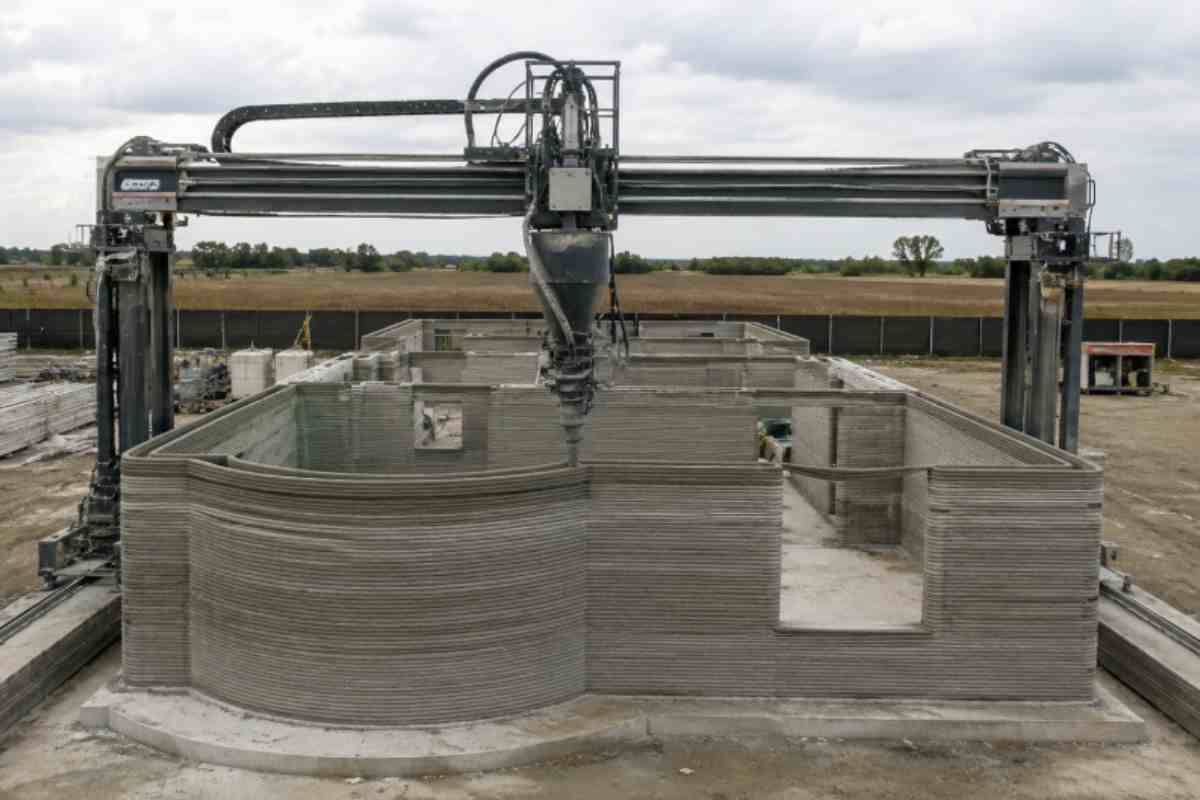
A revolution that doesn’t eliminate human labor—just evolves it. Source: wwwmelablog.it
How 3D Printing Works Without Breaking the Bank
Let's geek out for a sec. If you've ever seen a MakerBot printing a whistle in plastic filament, multiply that by 100,000 and swap the PLA for ultra-strong concrete. That's the essence of large-scale 3D construction printing.
- Digital Design Input: Architects feed the design into software that slices the building plan into horizontal layers.
- Material Delivery: A tank holds the cement-admixture slurry, which gets pressurized and fed to the print head.
- Layer-by-Layer Fabrication: The print head moves along programmed paths, depositing material in continuous bead-like lines.
- Post-Processing: Once cured, workers add utilities, finishes, and fixtures manually.
It's efficient, precise, and minimizes human error—but again, not totally autonomous. Humans remain critical players, especially in finishing stages where aesthetics and functionality intersect.
Will Your Neighborhood Get Its Own Robocar Factory?
As cool as this sounds, challenges remain. Regulatory frameworks haven't caught up. Insurance policies? Zoning laws? Permitting processes? Most governments are still figuring out whether to treat these as "buildings" or "machines." Spoiler alert: probably both.
Environmental sustainability is another layer. While there's less waste during printing, the energy required to power those printers and produce cement mixes needs scrutiny. Green innovation demands green execution.
Still, momentum is building. With climate change pushing cities toward smarter, faster, greener builds, companies worldwide are racing to refine this tech. Whether you call it progress or disruption, one thing's certain—it's happening whether we like it or not.
Quick Tips Before You Start Dreaming of Your Own 3D-Printed Pad
- Know your market: Investigate regions where 3D construction is legally recognized and financially supported.
- Partner wisely: Collaborate with firms experienced in hybrid construction—tech + touch labor.
- Secure funding: Explore grants aimed at sustainable housing and modular construction.
- Check regulations: Codes evolve slowly. Stay ahead by consulting local municipalities early.
- Think long-term: Plan for maintenance realities of printed structures, especially in extreme weather zones.
Final Verdict
The age of waiting months—or years—for a house to go up might finally be over. With startups like Grondplek leading the charge, construction is hurtling into an era where homes rise faster than Snapchat stories and tech billionaires launch rockets into space. This isn't sci-fi anymore—it's supply chain 2.0, powered by precision Robotics and a whole lotta concrete.
Ready to witness the next big thing in skyrising, affordable housing? Bookmark this story, share it with your contractor friends, and maybe start learning Python. Because tomorrow's builders might not carry tool belts—they'll carry laptops.
Comments below: Are you excited or skeptical? Either way, don't forget to turn on notifications so you never miss our latest deep dives into emerging tech. And hey—enable 2FA while you're at it. Cybersecurity matters, even in a world where houses print themselves.
Loading neon eBay deals...